Yesterday evening, between dinner and well past midnight, I cast a film, scouted eleven locations, shot forty-odd takes, scored the thing, and put it on YouTube. No camera was involved at any point. It’s a fan trailer for The Secret of Monkey Island— a love letter to the LucasArts classic, with every character and cove my own invention riffing on its archetypes — and it exists because the tools finally chain together: Higgsfield’s Soul stack for the cast and sets, Seedance 2.0 for the footage, Gemini for the score, Adobe Premiere for the cut.
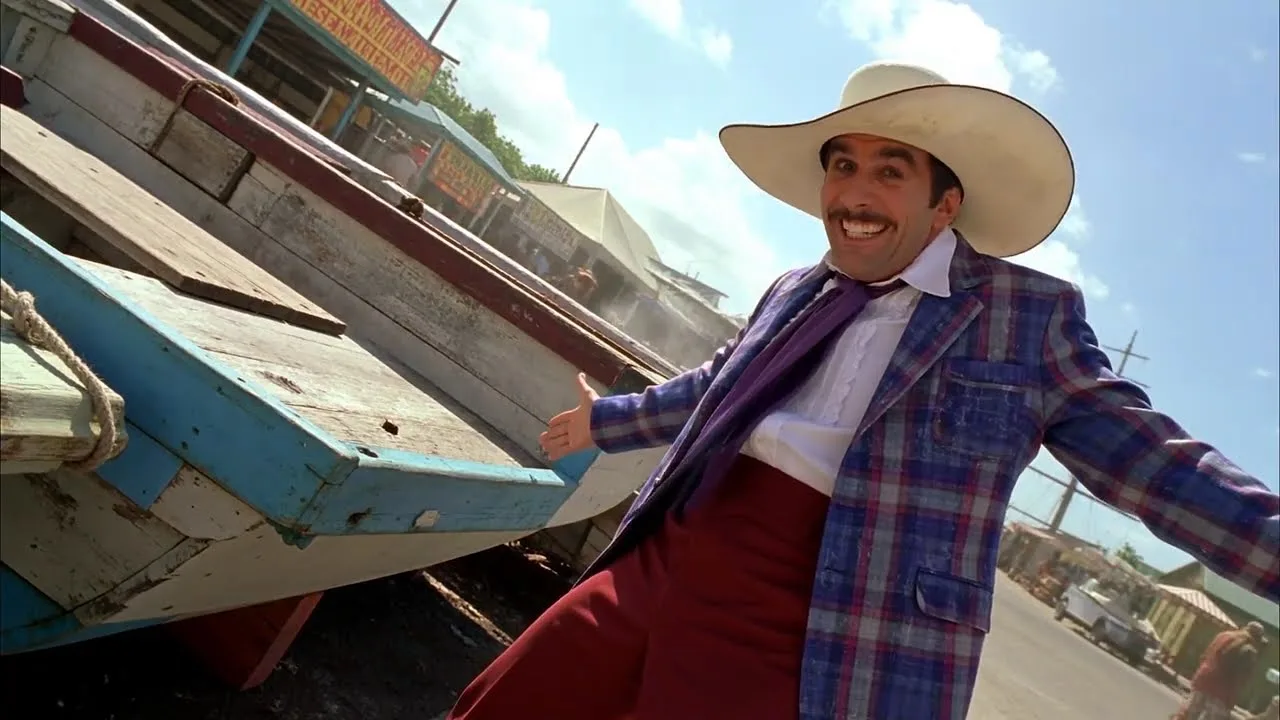
The whole production is a chain of reusable references: train a Soul ID once, cast characters and sets as reference elements once, then pin them into every shot prompt by id. Motion is Seedance 2.0 driven through Higgsfield; the edit and the music are still human-shaped work.
- 01The pipeline: 1 trained Soul ID → 8 Soul Cast characters → 11 Soul Location sets → forty-odd Seedance 2.0 takes at 1080p → Premiere stitch → Gemini score.
- 02Reference elements are the trick. Cast and set travel into each prompt as pinned ids, so the same hero and the same tavern survive from shot to shot — continuity by reference, not by luck.
- 03Prompts are shot lists, not wishes. Camera / Light / Mood / Narrative / Cast & Set / Audio, every take. Even so, one establishing shot ate a dozen takes — budget for retakes like a real shoot.
One evening, timed
A Soul is trained
Higgsfield builds “David W” — a reusable identity model of my face — from a handful of photos. One Soul V2 portrait to check the likeness holds. It does, worryingly well.
SOUL IDEight actors, cast from thin air
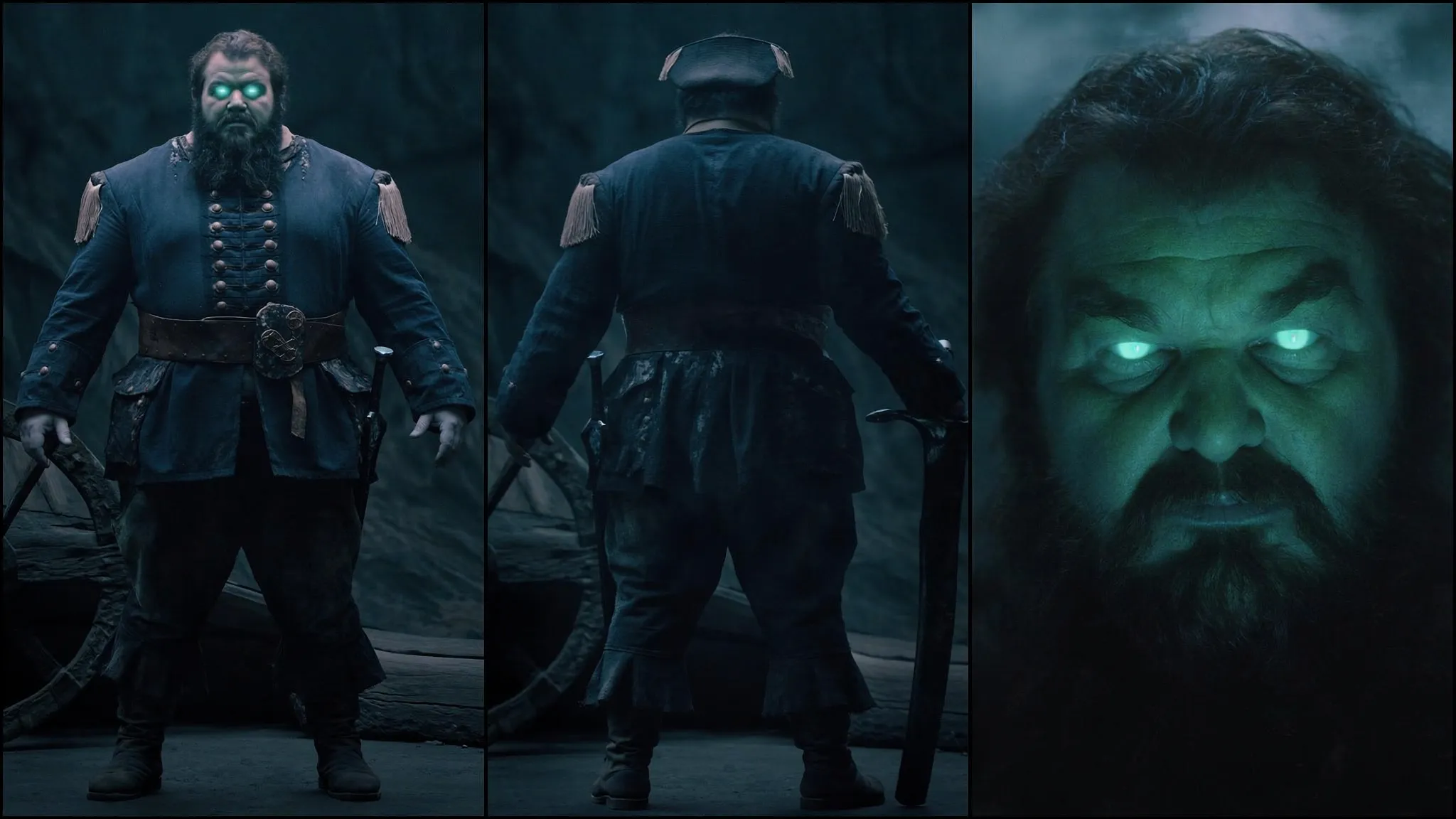
Each character is a name, a one-line backstory, and a generated turnaround sheet — front, back, close-up. Watchmen, a governor, two rival boat salesmen, and one ghost-ship captain with sea-green burning eyes.
SOUL CASTEleven sets scouted
Ultra-wide 2560px location plates: a candlelit tavern, a wharf, a chapel, a cliff shaped like a monkey’s head. Location scouting from a chair.
SOUL LOCATIONFirst unit rolls
Takes are 6–15 seconds at 1080p, 16:9, with diegetic audio generated in the shot — tavern murmur, creaking chairs, wheezy pirate laughter.
SEEDANCE 2.0The grind
One establishing shot — a slow pan off a cliffside down to a hilltop watch post — refuses to settle. Take after take after take. Some things about filmmaking survive the singularity.
A DOZEN TAKESMartini shot, underwater · wrap
The last prompt of the night is seven exhausted words with a typo in them. Then: Premiere for the stitch, one continuous Gemini cue laid over the cut, export, upload, bed.
WRAP01 Casting myself
Everything starts with the Soul ID. You hand Higgsfield a set of ordinary photos and it trains a compact identity model — mine is unglamorously named “David W” — that any later generation can reference by id. It is the difference between a pirate and me as the pirate, held stable across every shot, angle, and lighting setup of the shoot.
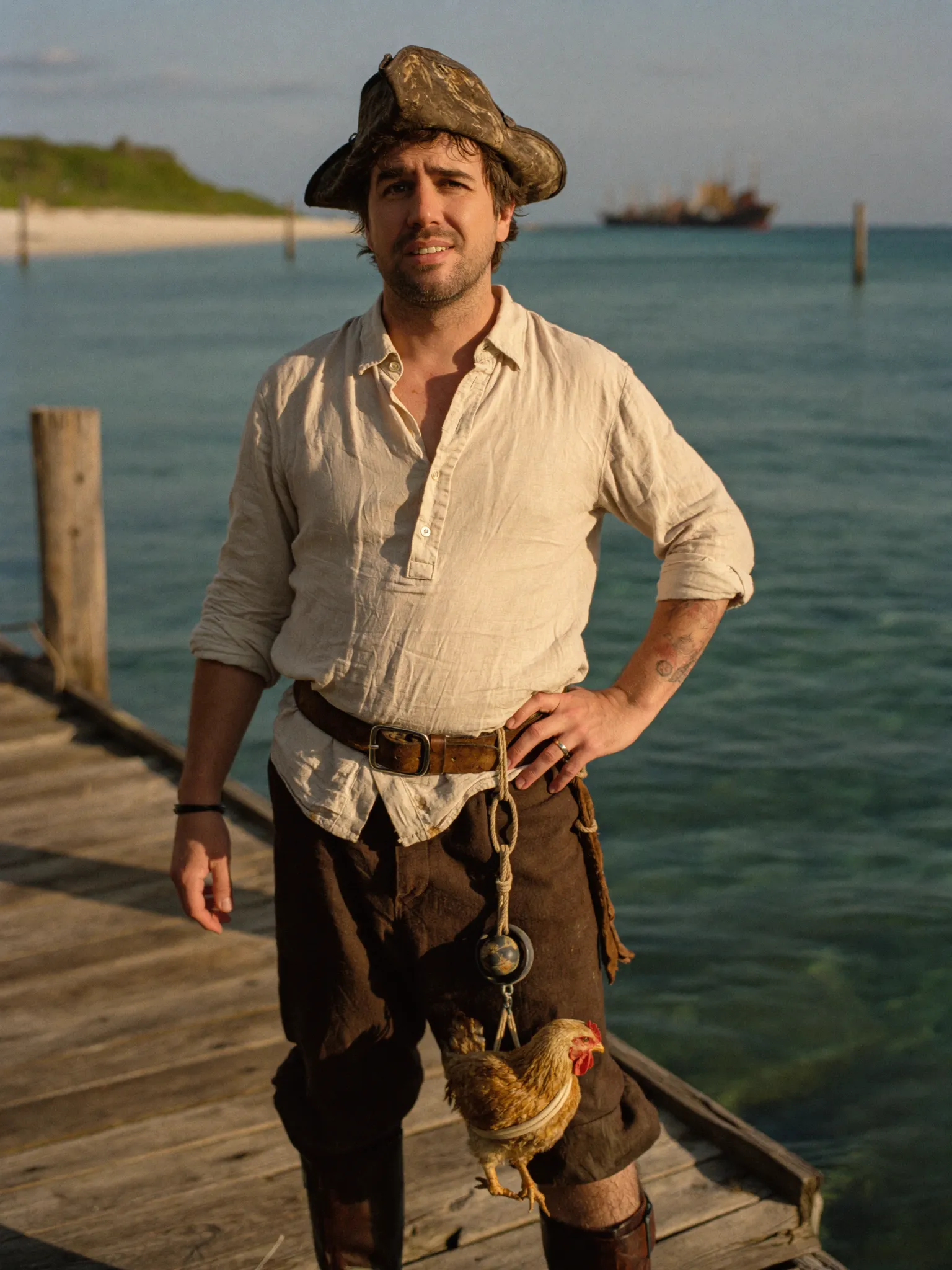
The first generation off the trained Soul is the portrait above — one prompt, no retouching. What sold me wasn’t the face, which is merely accurate. It was the hands, the ring, the tattoo: incidental detail carried over from the training photos without being asked for. The likeness isn’t a mask stretched over a stock body; it’s a character model that happens to be you.
A crew that never existed
- Bartholomew HaleSpotted a Spanish galleon off Port Royal; now on the Monkey Island cliff, where one missed signal kills.
- Elias CroweOld lookout, scarred in the Port Royal mutiny, watching for returning sails.
- Silas HargreavesThe mast-climber who flagged frigates; now he watches the jungle for returning mutineers.
- Mariana CortezBoarded a Spanish galleon at Santo Lucia; on Melee Island with mutiny imminent.
- Eleanora WhitfieldQuelled the Port Royal riot; protects a fragile peace beneath converging warships.
- Thomas BlackwellSurvivor of Port Royal’s sinking; steers a ghost ship, collecting souls.
- Rafael OrtegaEx-Havana auctioneer who swindled a senator; hawks patched boats to dodge collection.
- Leonard MalloryBankrupted selling salvaged yawls; needs one last impossible sale.
Soul Cast wants exactly what a casting director wants: a name and a logline. Give it “Thomas Blackwell — survivor of Port Royal’s sinking, now steers a ghost ship, collecting souls” and it returns a character sheet, not a mood board: the same actor front, back, and in close-up, wardrobe and all. That sheet is the whole point — it’s the reference the video model will hold onto later, which is why the ghost captain’s eyes burn the same sea-green in every shot he haunts.
02 Sets without scouting
Locations get the same treatment as actors: Soul Location produces ultra-wide 2560-pixel plates that become pinnable references. Eleven sets in under an hour — The Salty Parrot Tavern, Melee Island Wharf, Bahía Media Luna, La Boca del Mono, Morro del Vigía, Isla de la Iguana, Capilla de San Miguel, Blackwater Shoals, Monkey Head Cliff, Government House, and the Governor’s Mansion, Port Royal. The wide canvas is deliberate: establishing shots can pan inside a set that’s bigger than the film frame.
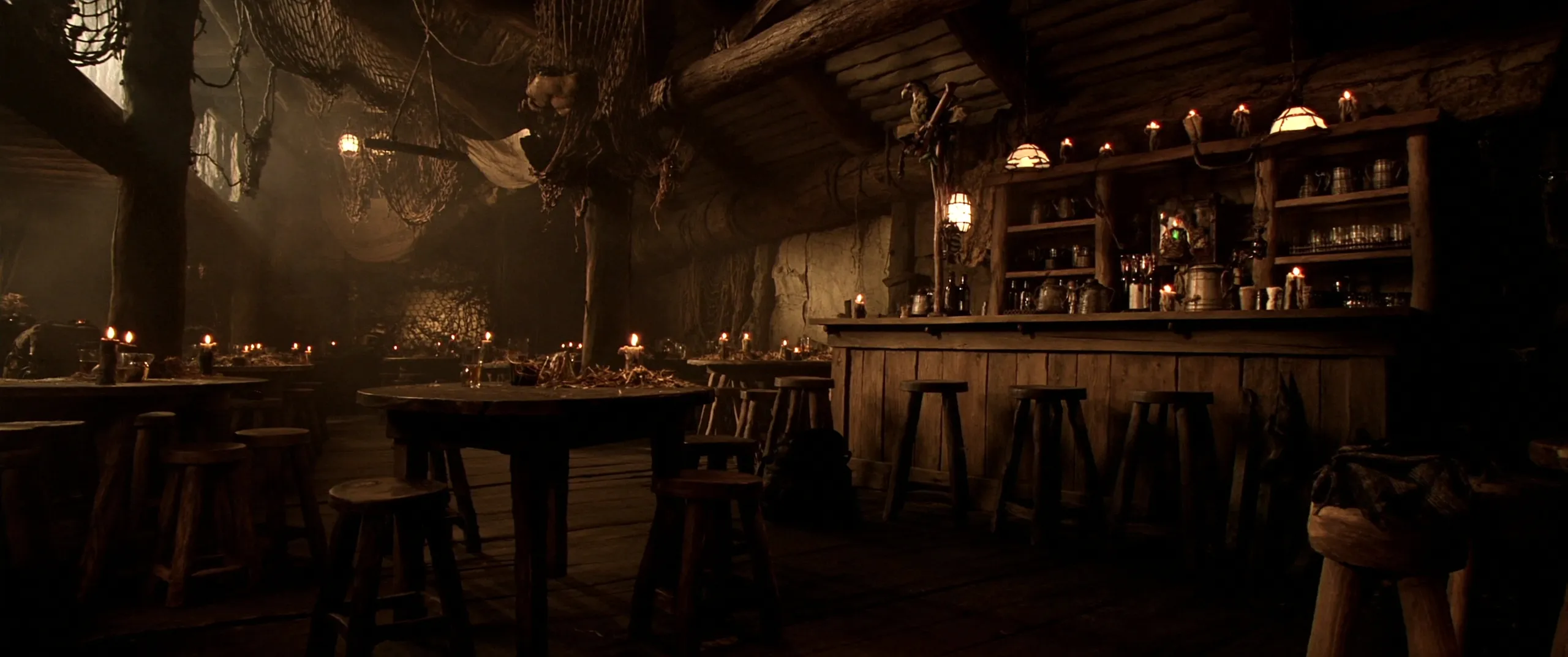
That’s the Salty Parrot above — candle smoke, net-hung rafters, a stuffed parrot presiding over the bar. It reads instantly as the pirate tavern of the source material without copying a single pixel of it, which is the entire art of a fan film: evoke, don’t trace.
The incantations
Every shot prompt is written like a call sheet with departments: Camera, Light, Style & Mood, Narrative, Cast & Set, Audio. The triple-bracketed ids are reference elements — the cast sheets and location plates from earlier, pinned into the scene by id. This one is the tavern scene, exactly as it went to the model:
Camera: Low steady wide shot on Guybrush in the doorway, slow lateral drift across the smoky tavern floor to settle on a table where three figures hold court, then a gentle push into a three-shot as they lean in to look him over.

Light: Warm amber torchlight and candle flicker, deep smoky shadows, halation around every flame source.

Style & Mood: Broad comic mockery, not menace — self-important bravado played for laughs, expired Kodachrome color science, dense grain, painterly warm-lit VGA Caribbean palette.

Narrative Summary: Guybrush announces himself to the Scumm Bar's three Important-Looking Pirates, who find him more amusing than threatening and toss him the Three Trials almost as an afterthought.

Cast & Set: <<<47495081-925e-…>>> steps just inside the doorway of <<<bc048ad1-9732-…>>>, the smoky candlelit Scumm Bar, scarred wooden bar counter and stuffed parrot visible; three Important-Looking Pirates sit at a nearby table, done up in mismatched sashes and feathered hats, each plainly delighted with his own importance. Guybrush, hopeful: "I want to be a pirate!" A beat of silence — then the three dissolve into wheezy, tickled laughter. First Pirate, recovering, magnanimous: "Think you've got what it takes, do you?" Second Pirate, leaning in, delighted: "There's the Three Trials, of course." Third Pirate, already bored, waving a hand: "Sword. Thievery. Treasure. Off you go, then."

Audio: murmuring tavern chatter, creaking chairs, wheezy pirate laughter, mugs clinking.
Now the last take of the night, seven hours later — the underwater breath-hold under the dock. The departments are gone. The typo is real (“breadth”), and Seedance read straight through it:
<<<47495081-925e-…>>> holding is breadth under water, standing on the sea bed, fully submerged below the dock <<<6b60d7b7-668a-…>>>
03 The cutting room
Forty-odd takes went into the bin for the couple of minutes that survived. That ratio is the honest headline: generative video in mid-2026 is not “type a sentence, receive a film.” It’s a very fast, very cheap second unit that never complains about retakes — the dozen runs at that cliffside establishing shot would have been a mutiny on a real set.
The stitch happened in Adobe Premiere, the same as any other edit: selects, trims, L-cuts, a title card. Seedance generates each take’s diegetic sound in the shot — the chatter and creak and laughter you hear under the scenes — but the spine of the trailer is one continuous music cue generated with Gemini and laid across the whole cut. Music first, then picture trimmed to it: trailers are songs with pictures, and that part of the craft hasn’t moved an inch.
If this rhymes with how I wrote a novel with Claude, it should: the model does volume, the human does taste, and the seam between them is where the work actually lives.
What worked, what fought
Cast references before you shoot anything.
Sheets, not vibes. A Soul Cast turnaround and a Soul Location plate cost minutes and buy you continuity for the whole shoot. Footage generated before the references existed was the footage I threw away.
Write prompts like call sheets.
Camera / Light / Mood / Narrative / Cast & Set / Audio. The departments force you to make decisions the model would otherwise make for you — and it will make them differently on every take.
Spend your retakes on establishing shots.
Character close-ups mostly landed in one or two takes; the wide, slow-camera geography shots burned a dozen. Complex camera moves through empty space are still where the wheels wobble.
Keep a human edit.
Premiere is where forty takes became a film. The tools generate footage; they do not yet generate judgment — rhythm, restraint, the cut on the laugh instead of after it.
- The meter is real. This evening ran my Higgsfield balance to zero. Generation-per-take economics are fine until the retakes start; budget like a producer, not a tourist.
- Likeness is a loaded tool. A trained Soul ID reproduces you — ring, tattoo, gait — from a handful of photos. Train your own, keep it private, and think hard before pointing one at anybody else.
- This is fan art, framed as such. Every name, face, and set here is original work riffing on the archetypes of a 1990 classic. Evoke, don’t trace, and say what it is.
- All production details — models, take counts, timestamps, prompts — are from the actual generation logs of the Jul 2 session; the two incantations above are quoted verbatim, typo included, with reference ids shortened for publication.