On Monday the UN opens the Global Dialogue on AI Governance in Geneva — the first time every member state sits down to talk about the engine as such. The day after it closes, a new AI for Good Global Commission holds its first meeting: Benioff and Kagame in the co-chairs, and the merchant princes of AI — Huang, Jassy, Smith, Clark, Gomez — seated beside heads of state.
- 01Two bodies, two theories of power. The Dialogue is universal and voluntary — every state, no sword. The Commission is small and chosen — real money and real compute at the table, but a mandate that fits on a press release.
- 02The roster is the story. Five of the seats run the companies that build or host the frontier — including Anthropic co-founder Jack Clark, three days after Washington handed his company its flagship back. The labs are buying legitimacy the way medieval merchants bought pews.
- 03Neither superpower is at the head of the table. Washington and Beijing govern AI bilaterally — by export letter and procurement list. Geneva is where everyone else goes to matter anyway.
Great councils are older than nation states, and they have always worked the same way: when a power arrives that no single crown can tax, bind, or excommunicate alone, everyone rides to one city and talks. The Church did it at Nicaea. The estates did it at Worms. This week it is Geneva, and the power in question does not attend in person — it attends as its owners, its renters, and the hundred-plus states that have discovered they are tenants in an economy whose landlords all hold passports from somewhere else.
01The week’s docket
Three sittings share one city and one week. They are legally unrelated and practically inseparable — the same people walk between all three.
One city, three sittings
Global Dialogue on AI Governance
First session ever: high-level segment, four thematic pillars, and the Scientific Panel presenting an overview of its first report.
All UN member statesAI for Good Summit
The ITU’s annual fair runs the same week — demos, standards tracks, and the corridor where the real conversations happen.
Industry, academia, agenciesAI for Good Global Commission
The new hand-picked body holds its inaugural meeting — heads of state and AI CEOs at one table, co-chaired by a president and a salesman.
Sixteen-odd chosen seats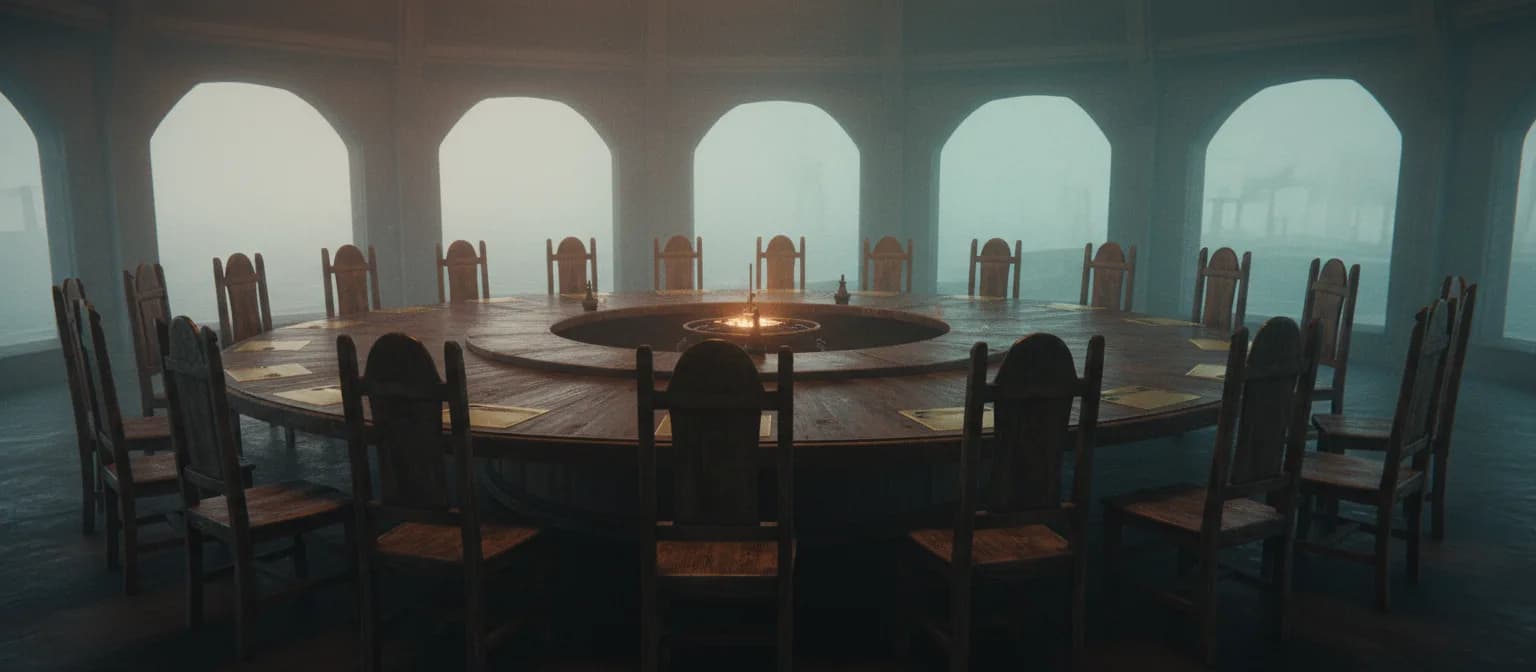
02 Two chambers, one city
The week’s two new bodies embody opposite theories of how you govern a thing like this, and the contrast is the most instructive part of the whole affair.
The two chambers
Global Dialogue on AI Governance
- Who sits
- All UN member states, with observers from industry and civil society.
- Authority
- A General Assembly charter — and nothing that binds. It produces framing, norms, and a shared evidence base.
- Its power, honestly
- Legitimacy. What this room agrees to call a risk eventually shows up in national law, the way WSIS language did for the internet.
AI for Good Global Commission
- Who sits
- Sixteen-odd chosen seats: two co-chairs, presidents, ministers — and five executives who run the frontier’s compute and models.
- Authority
- Convened by the UN and ITU with a mission statement — expand access, strengthen trust, accelerate impact — and no treaty behind it.
- Its power, honestly
- Capacity. The people at this table can actually ship compute, models, and money to the places the Dialogue only talks about.
03 The council table
Here is the Commission’s table as reported at announcement, arranged the way a herald would arrange it. Note what the arrangement admits: the crowns hold the chairs, but the merchants hold the mint.
The seats, by estate
04 The four pillars
The Dialogue’s co-chairs have hung the two days on four themes. Read them in order and you can see the negotiation that produced them — one pillar for the boosters, one for the have-nots, one for the worriers, one for the lawyers.
Four pillars, one roof
Opportunities & implications
What the engine is actually doing to economies, science, and states — the shared evidence base the room starts from.
Bridging AI divides
Compute, data, and skills for the hundred-plus countries that rent intelligence but own none of the means of producing it.
Safe, secure & trustworthy AI
The risk half of the ledger — incidents, evaluations, and what “trustworthy” means when no one shares a definition.
Human rights
Respecting, protecting, and promoting rights in AI’s design and deployment — the pillar with the oldest law behind it.
05 The empty thrones
Now the absences, which say as much as the seats. Neither the United States nor China co-chairs anything this week. The two states that actually command frontier AI treat its governance as bilateral leverage — an export letter here, a procurement list there — not as something you charter a council for. The month-old Fable 5 affair is the proof: the only AI governance of 2026 that demonstrably bound anyone was a Friday-evening letter from one ministry to one company, and its resolution was a private deal. No communiqué in Geneva will carry a fraction of that force.
The critics have the mirror-image complaint. Watchdogs read the Commission roster and saw a “for good” body stuffed with the executives it would notionally restrain — and policy scholars note that without state-scale capital for electricity and fiber, the access agenda risks deepening the very divides it names. Both criticisms are fair. Both would also have been made, word for word, about every merchant who ever sat in a king’s council — and the merchants sat anyway, because the crown needed the mint and the mint needed the law.
“Expand access, strengthen trust and accelerate impact.”
The Commission’s stated mission — the announcement’s own words, doing a great deal of work06 My read
It is easy to be cynical about this week, and the cynicism writes itself: a talking shop with no sword, a privy council of vendors, four pillars vague enough to survive translation into a hundred and ninety political systems. All true. And mostly beside the point.
Councils without swords are how norms get minted, and norms are what the middle of the world runs on. The internet’s governance never had an army either; it had meeting minutes, and twenty years later those minutes are load-bearing in every telecom law on Earth. When the Scientific Panel’s first report gets presented Monday, its framing — what counts as a divide, what counts as an incident — will quietly become the reference point that a hundred smaller states legislate against, because they have no in-house alternative. That is real power. It is just slow power.
The sharper thing to watch is the seam between the two chambers. The Dialogue has legitimacy and no capacity; the Commission has capacity and borrowed legitimacy. If the Commission starts delivering the Dialogue’s second pillar — actual compute, actual connectivity, actual skills programs in the have-not hundred — the two-chamber structure works, and Geneva will have invented something genuinely new: a governance loop where the states define the good and the merchants are conscripted to fund it. If instead the Commission becomes a photo apparatus, the whole experiment gets remembered as the week the labs bought a UN letterhead.
What to watch
Does the Panel's report get adopted or shelved?
The Scientific Panel’s first report is the evidence base. Watch whether the Dialogue’s closing summary actually cites its framings — that’s the difference between an IPCC and a PDF.
Does pillar two get a number attached?
“Bridging divides” is rhetoric until someone commits compute, fiber, or dollars with a schedule. The Commission’s July 8 sitting is the first place a number could appear.
Who comes back in 2027?
The Dialogue’s second session is New York, 2027. Repeat attendance at ministerial level is how you measure whether a norm is setting or the circus has moved on.
If you build: keep watching the letters, not the communiqués.
Nothing signed in Geneva this week binds your deployment. The instruments that do — export controls, procurement standards, the security terms in the Fable 5 settlement — travel ministry to company, and they arrive on Friday evenings.
Dates that matter
The charter
The UN General Assembly establishes the Global Dialogue on AI Governance and the Independent International Scientific Panel on AI in a single resolution — the machinery, a year before its first turn.
THE RESOLUTIONThe summons goes out
The UN and ITU set the Dialogue’s first session for July 6–7 in Geneva, folded into the AI for Good week — high-level segment, four pillars, the Panel’s report.
THE SUMMONSThe privy council is named
The AI for Good Global Commission is announced: Benioff and Kagame co-chairing, CEOs and heads of state as members, first meeting set for July 8 in Geneva.
THE COMMISSIONThe council sits
The Dialogue convenes Monday and Tuesday; the Commission holds its inaugural sitting Wednesday. This piece goes to press two days before the room fills.
THE COUNCIL- This is a preview, not a report. Written July 4, two days before the Dialogue opens. What the room actually produces may make every paragraph above look generous or naive.
- The roster is as-announced. Commission membership is taken from the July 1–2 announcements; such bodies routinely add seats, and attendance at the first sitting may not match the press release.
- The Commission’s mandate is a mission statement.No published document yet specifies what it can decide, fund, or compel. “Capacity” above is an inference from who sits on it.
- The estates-and-councils frame is mine,not the UN’s. Useful for seeing the power structure; do not mistake it for how anyone in the room describes themselves.