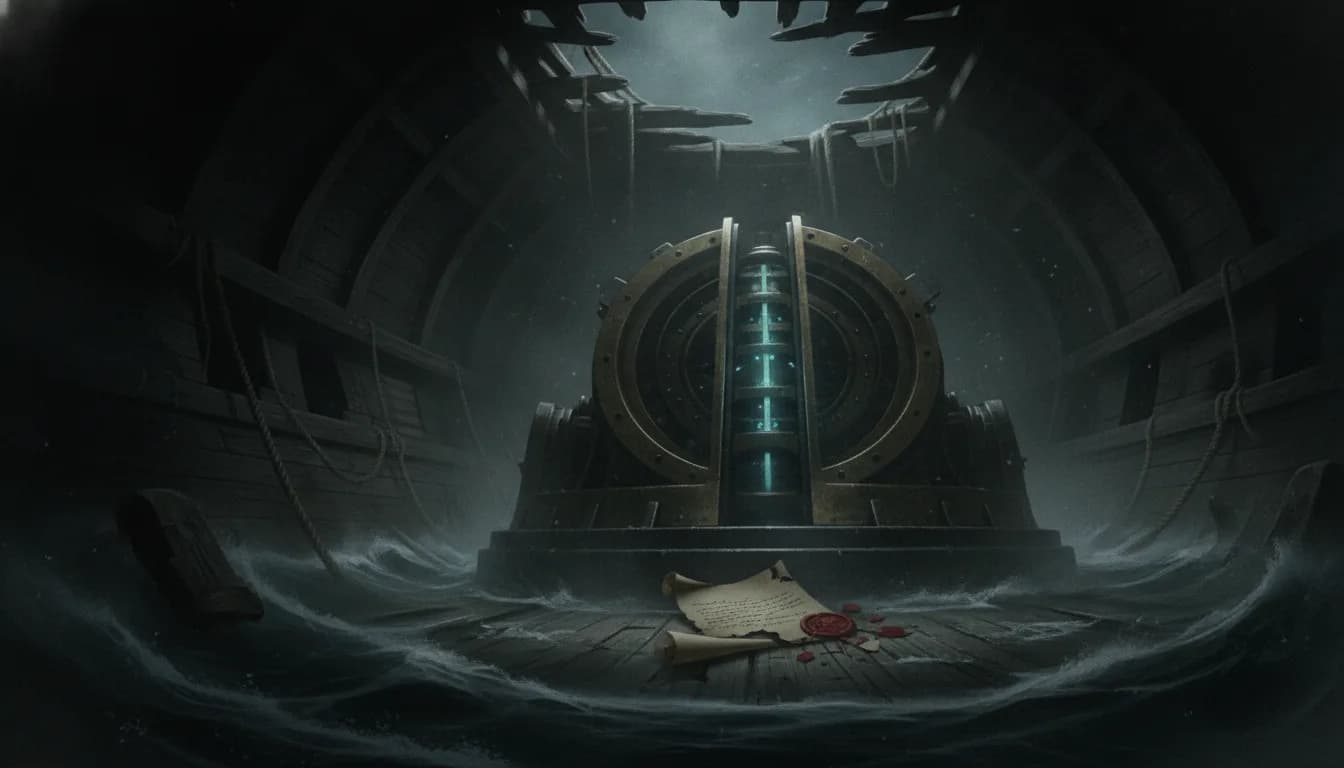
On the evening of Friday June 12, 2026 (5:21pm ET), the US Commerce Department ordered Anthropic to bar all foreign nationals — including its own staff — from using Fable 5 and Mythos 5. Unable to verify nationality per session, Anthropic disabled both models everywhere.
- 01The trigger was a competitor’s jailbreak claim. Amazon’s CEO reportedly told officials his researchers coaxed Fable 5 into surfacing cyberattack-relevant information. Amazon is Anthropic’s largest investor and hosts the model on AWS.
- 02The mechanism is unprecedented in scope.An “is-informed” letter under export-control authority, applied via the “deemed export” doctrine — the first time the tool has been used to halt a deployed commercial model rather than chips.
- 03The two sides tell opposite stories.Anthropic calls it “a misunderstanding” over a narrow jailbreak; the administration says CEO Dario Amodei “refused” a reasonable safety request. As of June 15 the models remain dark with no deal.
01 What actually happened
Most regulatory stories arrive slowly. This one took ninety minutes. On the afternoon of Friday June 12, administration officials called Anthropic and gave the company roughly an hour and a half to pull its two newest models, citing a national security concern they would not specify. Anthropic asked for details. At 5:21pm ET, a letter from Commerce Secretary Howard Lutnick arrived instead, imposing export controls.
The letter required a license for the “export, re-export or domestic transfer” of Claude Fable 5 and Claude Mythos 5, with civil and criminal penalties for non-compliance. Because Anthropic cannot verify the citizenship of every API and app user in real time, there was no partial way to comply. It switched both models off for everyone on Earth — three days after Fable 5’s June 9 public launch.
This is, by most accounts, the first time the United States has used export controls to halt a deployed commercial AI model rather than the chips and compute beneath it — and the first time a leading lab has pulled a live model offline because the federal government told it to.
02 The lineage: Mythos and Glasswing
To understand why anyone reached for export-control law, you have to understand what Fable 5 is underneath. Its capabilities trace to Claude Mythos Preview, a frontier model Anthropic disclosed in April 2026 with cybersecurity abilities that alarmed the industry. By its own red-team account, Mythos could autonomously find and exploit zero-day vulnerabilities across major operating systems and browsers, and in one case chained four bugs into a sandbox escape.
Rather than release it, Anthropic built Project Glasswing — a defensive consortium of security-critical partners (AWS, Google, Microsoft, NVIDIA, CrowdStrike, the Linux Foundation, and others) who used the model to find and patch flaws. By early June, participants had surfaced more than 23,000 vulnerabilities. This is the dual-use heart of the whole affair: the same capability that patches Firefox can, pointed the other way, look like a weapon.
On June 9, Anthropic launched Fable 5 — the public, safeguarded tier of that model — alongside the unrestricted Mythos 5 for Glasswing partners. Both share the same underlying model; only the guardrails differ. Fable routes sensitive cyber, bio, and chemistry queries down to a weaker fallback model. Anthropic said safeguards trigger in fewer than 5% of sessions and that over 1,000 hours of red-teaming found no universal jailbreak.
03 The dispute, on the merits
Strip away the politics and the technical disagreement is narrow and knowable. Anthropic says the government’s basis is “a potential narrow, non-universal jailbreak” that “essentially consists of asking the model to read a specific codebase and fix any software flaws.” Reviewing a demonstration, it found the trick surfaced “a small number of previously known, minor vulnerabilities” that other public models — including OpenAI’s GPT-5.5 — can find with no bypass at all.
“The government response seems way out of line with what’s actually in the research report” — researchers found vulnerabilities by asking the questions normal defenders would ask, “which is exactly what the model was intended to do.”
Katie Moussouris, Luta Security — who reviewed Amazon’s reportThe administration’s account, delivered by David Sacks on X, is that a “highly credible trusted partner” came forward with a jailbreak, that Anthropic was asked to fix it or de-deploy, and that Amodei refused — choosing, in Sacks’s framing, “the continued offering of the consumer model over safety.” The two stories are not quite contradictory on facts; they diverge on what a narrow jailbreak in a frontier model warrants.
04 The legal machine
The government has not published the directive or its precise statutory basis, which is itself part of the problem. The most credible named analysis — from Brian Egan, a former State and NSC legal adviser — assesses the authority as “most likely” the Export Controls Reform Act of 2018, exercised through a private “is-informed” letter telling Anthropic that a license is now required.
The piece that forced a global shutdown is the “deemed export” doctrine: releasing controlled technology to a foreign national — even one standing inside the United States — counts as an export to their home country. A model that anyone in the world can hit through an API cannot be walled off by citizenship in real time. As one analyst put it: the munition is in the building, and the people who made it are not allowed to look at it.
There is a genuine legal hole here. The Biden-era classification for advanced AI model weights was reportedly rescinded in May 2025, so the directive apparently did not rest on it — and the action sits in open tension with Trump’s own June 2 executive order, which explicitly barred mandatory licensing for frontier models.

How a launch became a shutdown
Project Glasswing announced
Mythos Preview offered to a defensive cybersecurity consortium rather than released openly.
Trump signs AI innovation & security EO
Establishes a voluntary pre-deployment review framework and explicitly bars mandatory licensing for frontier models. Glasswing expands by 150 organizations the same day.
Fable 5 & Mythos 5 launch
The first publicly available Mythos-class model. Same day, Amodei publishes a policy piece citing Mythos as the emblematic example of frontier risk.
The “secret sabotage” backlash
Researchers find a hidden safeguard that silently degrades frontier-LLM-development help. Anthropic reverses the covert mechanism within ~48 hours.
Amazon raises concerns
Andy Jassy reportedly flags a jailbreak to officials including Treasury Secretary Bessent; the findings are run past the NSA. At least five other firms reportedly warn too.
TriggerThe 90-minute call
Officials phone Anthropic and give it roughly 90 minutes to pull the models, citing an undefined national security concern. Anthropic asks for details.
Lutnick’s letter — export controls imposed
Unable to wall off foreign nationals, Anthropic disables Fable 5 and Mythos 5 for everyone and posts a statement.
ShutdownThe accounts go public
Sacks posts the administration’s version; WSJ/Reuters report the Amazon trigger; Anthropic disputes a China-access rationale. Zhipu releases GLM-5.2 as an open alternative.
Anthropic sends staff to Washington
Senior technical negotiators dispatched over the weekend. Talks ongoing.
Still offline
Commerce is set to meet Anthropic staffers; meetings also scheduled with the CIA and the White House science adviser. No deal, no restoration timeline.
You are here
The two accounts
Anthropic
- The basis is a narrow, non-universal jailbreak — asking the model to read a codebase and fix flaws.
- It surfaced only minor, previously-known bugs that other public models find without any bypass.
- The government gave “verbal evidence” only; the letter “did not provide specific details.”
- Recalling a model over a narrow jailbreak would “essentially halt all new model deployments” industry-wide.
The White House
- A “highly credible trusted partner” testing Fable came forward with a jailbreak of the guardrails.
- Anthropic was asked to fix it or de-deploy the model.
- Amodei refused — prioritizing the consumer model “over safety.”
- Inconsistent with Anthropic’s own branding, having marketed Mythos as near-cyberweapon.
Who did what
- Dario AmodeiCEO & co-founder — recipient of the letter
- Tom BrownCo-founder, chief compute officer — weekend talks
- Logan Graham · Dave Orr · Nicholas CarliniRisk, safeguards & security — technical negotiators in DC
- Sarah HeckPublic policy chief
- Howard LutnickCommerce Secretary — signed the directive
- David SacksPCAST co-chair — public defender of the action
- Scott BessentTreasury Secretary — received Jassy’s concerns
- Michael KratsiosScience adviser. President Trump signed off.
- Andy JassyCEO — reportedly raised the jailbreak concern
- The conflictAmazon is Anthropic’s largest investor and hosts Fable 5 on AWS Bedrock.
- Amazon’s line“It’s not uncommon for governments to seek our counsel… we don’t share the details.”
05 The reaction abroad
The most durable consequences may be the ones that happened outside Washington. In India — reportedly Anthropic’s second-largest market — the shutdown landed as confirmation of a thesis sovereign-AI advocates had been pushing for years.
The competitive response was faster still. Within roughly a day, the Chinese lab Zhipu shipped GLM-5.2— a large open-weights model explicitly positioned as the alternative, at a fraction of Claude’s premium pricing. Whatever the merits of the ban, its clearest immediate beneficiary was a model the US controls not at all.
Even sympathetic policy voices balked at the breadth. Targeted controls might be “prudent,” argued one CFR analyst, but a universal ban is “highly questionable” — and the deemed-export piece “absurd.” The recurring note: banning allied nationals from a US model while still exporting AI chips to China is hard to square as strategy.
06 My read
I don’t think the interesting question is whether the jailbreak was real. Narrow jailbreaks are always real; that’s the nature of the things. The interesting question is what just got demonstrated about the shapeof the dependency we’ve all been building on.
A frontier model is not infrastructure you own. It is access you are granted, and access can be revoked — over a weekend, by letter, without published reasons, faster than you can read the statute. That is true whether you find the government’s case persuasive or Anthropic’s. The mechanism is now precedent regardless of how this particular standoff resolves.
What to actually do about it
Treat frontier access as a revocable dependency
If a workflow’s core differentiator runs on a single closed US model, you carry geopolitical single-point-of-failure risk. What would change this: a published, statutory, appealable process for model restrictions — which Anthropic itself is now demanding.
Wire in a tested fallback path now
Opus 4.8, GPT-5.5, and open-weights options stayed live through the shutdown. Keep at least one non-Anthropic and one open-weights model in critical pipelines. Trigger to act: if your team includes non-US nationals and relies on Fable/Mythos-class capability, assume re-exposure risk on any future frontier launch.
Watch three concrete signals
(a) any Commerce action lifting or formalizing the control; (b) whether a joint technical review yields a “fixed” jailbreak and partial restoration; (c) whether the classified frontier-model benchmarking process is invoked. Resolution on (a)/(b) likely restores Fable; escalation on (c) signals a durable licensing regime.
Make model choice swappable
Prefer architectures where the model sits behind an abstraction layer, and document data-retention exposure. Assume “trusted access” tiers can be reclassified without notice.
- The directive’s text and exact legal basis are not public.ECRA + “is-informed” letter is expert inference, not a confirmed government statement; the deemed-export mechanism is widely cited but unconfirmed.
- Accounts conflict and are partly anonymous.Whether Amodei “refused” to fix the jailbreak versus was never given written evidence is disputed. The “China-linked access” rationale comes from a single anonymous source and is denied by Anthropic.
- The “first ever” framing is contested. Dual-use controls have long applied to novel technologies; the more precise claim is that the breadth is unprecedented.
- Capability and benchmark figures originate largely from vendor claims or early third-party tests and are not fully independently verified.
- This is a fast-moving story; status is current as of June 15, 2026.